
“Sabe más el tonto en su casa que el sabio en la ajena”.
Category Archives: Languages
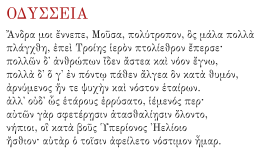
Ἑλληνική – 2016-07-24
From Wikipedia:
- ὁ λοχαγὸς ᾔδει ὅπου ἔκειτο ἡ ἐπιστολή – The captain knew where the letter was lying.
- ἐστρατοπεδεύοντο ἑκάστοτε ἀπέχοντες ἀλλήλων παρασάγγην καὶ πλέον – Every night the (two armies) would camp a parasang or more apart from each other.
- ταῦτα πολὺν χρόνον οὕτως ἐγίγνετο – These things carried on like this for long time.
- συμβαλόντες τᾱ̀ς ἀσπίδας ἐωθοῦντο, ἐμάχοντο, ἀπέκτεινον, ἀπέθνῃσκον – Throwing together their shields, they began shoving, fighting, killing, and dying.
- μετὰ τὸ δεῖπνον τὸ παιδίον ἐβόα – After dinner the baby began crying.
- ἐπειδὴ δὲ ἕως ἐγένετο, διέβαινον τὴν γέφυραν – And when dawn came, they began crossing the bridge.

Čeština – 2016-07-20
Personal, possessive and demonstrative pronouns
- Pavel je doma. On je doma. – Paul is home. He is at home.
- Pes je venku. On je venku. – The dog is outside. It is outside.
- Hrad stojí na kopci. On stojí na kopci. – The castle stands on a hill. It stands on a hill.
- Monika je hezká. Ona je hezká. – Monica is pretty. She is pretty.
- Kráva se pase. Ona se pase. – The cow is grazing. It is grazing.
- Zahrada je za domem. Ona je za domem. – The garden is behind the house. It is behind the house.
- Dítě si hraje. Ono si hraje. – The child is playing. He/She is playing.
- Kotě si hraje. Ono si hraje. – The kitten is playing. It is playing.
- Auto je bílé. Ono je bílé. – The car is white. It is white.
- Chlapci jsou doma. Oni jsou doma. – The boys are at home. They are at home.
- Psi jsou venku. Oni jsou venku. – The dogs are outside. They are outside.
- Hrady stojí na kopcích. Oni stojí na kopcích. – The castles stand on hills. They stand on hills.
- Dívky jsou doma. Ony jsou doma. – The girls are at home. They are at home.
- Krávy se pasou. Ony se pasou. – The cows are grazing. They are grazing.
- Knihy jsou staré. Ony jsou staré. – The books are old. They are old.”
- Koťata si hrají. Ona si hrají. – The kittens are playing. They are playing.
- Auta jsou bílá. Ona jsou bílá. – The cars are white. They are white.

ภาษาไทย – 2016-07-20

עברית – 2016-07-20
מדולינגו:
| מה שלומךְ ? | How are you? |
| בוקר או לילה ? | Morning or night? |
| טל לא מדבר אנגלית . | Tal doesn’t speak English. |
| אני בסדר. | I’m fine. |
| תודה , בהצלחה ! | Thank you, good luck. |
| לא קוראים לי יוסי. | My name is not Yossi. |
| אין בעד מה. | You are welcome. |
| בתיאבון! | Enjoy your meal! |
| שלום , קוראים לי יוסי . | Hello, my name is Yossi. |
| תודה רבה, בתיאבון. | Thank you very much, bon appetit. |
| שלום, מה שלומך? | Hello, how are you? |
| בהצלחה ! | Good luck! |
| בוקר טוב או לילה טוב ? | Good morning or good night? |
| תדה | thanks |
| סליחה | I’m sorry |
| את בסדר? | Are you ok? |
| בוקר יפֶה . | A beautiful morning. |

Tiếng Việt – 2016-07-19
Français – 2016-07-18
- affleurer \a.flœ.ʁe\ :
- mettre à fleur ou de niveau deux corps contigus, soit verticaux, soit horizontaux, sans saillie de l’un sur l’autre.
- toucher en étant au même niveau.
- être à la surface.
- toucher, comme venu d’une profondeur.
Examples:
- Affleurer les battants d’une armoire.
- Affleurer une trappe au niveau du plancher.
- La rivière affleure ses bords.
- Ce filon de mine affleure le sol.
- Ces pièces de bois affleurent bien.
- Quelques portions même affleuraient la nappe liquide, et les dernières ondulations des lames couraient en écumant à leur surface, comme si elles se fussent développées sur une grève.
- Tous ces dépôts constituent une véritable moraine frontale vers laquelle se dirigent les stries NE.-SW. visibles sur les bancs de poudingue affleurant à quelque distance.
- Un sentiment de triomphe affleure-t-il Louise?
- effleurer \e.flœ.ʁe\ :
- raser, passer tout près, atteindre légèrement.
- enlever seulement la partie superficielle d’une chose.
- action qui consiste à enlever, du côté de l’épiderme les parties d’une peau qui la rendent dur.
- s’enlever un morceau de peaux (par exemple en se rasant).
Examples:
- Alors une bouche brûlante / Effleure et rebaise à loisir […]
- En ce moment, les cheveux de Juliette effleurèrent les joues de Vandenesse[…]
- Bien protégé derrière le pare-brise, le déplacement d’air provoqué par la rotation de l’hélice m’effleurait à peine les joues.
- J’avais un mouvement précis de la langue pour empêcher le pain sacré d’effleurer mes dents.
- Pour continuer notre comparaison mythologique, l’amour ne l’avait pas encore effleurée de son aile.
- Le coup n’a fait que lui effleurer la peau.
- Cet homme laboure mal, il ne fait qu’effleurer la terre.

Kiswahili – 2016-07-17
From Duolingo:
- ng’ombe – cows
- nguruwe – pigs
- wali – cooked rice
- kahawa na maziwa – coffee & milk
- viazi – potatoes
- Wewe si nyanya! – You are not a tomato! / You are not a grandmother!
- nyama ya ng’ombe – beef
- nyama ya kuku – chicken (meat)
- Tunakula pilipili hoho. – We eat green peppers.
- Wanakula nyama ya mbuzi na matunda. – They eat goat meat & fruit.
- Vitunguu si vitunguu saumu! – Onions are not garlic!
- karoti – carrot
- pilipili hoho na vitunguu – green peppers & onions
- Unakula viazi? – Do you eat potatoes?
- Ninapenda wali. – I love rice.
- Chipsi na nyanya, tafadhali. – Chips & tomatoes, please.
- Anakunywa kahawa kila asubuhi. – He drinks coffee every morning.
- maembe – mangoes
- Ninaomba wali. – I would like cooked rice.
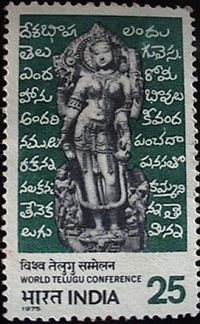
తెలుగు – 2016-07-17

Ελληνικά – 2016-07-16
Από το Duolingo:
- Το βιβλίο του – His book.
- Το βιβλίο αυτού – This one’s book.
- Το βιβλίο του άντρα – The man’s book.
- Το βιβλίο αυτού του άντρα – This man’s book.
- Τους διαβάζεις ένα βιβλίο – You read them a book.
- Διαβάζεις ένα βιβλίο σε αυτούς – You read a book to them.
- Το παιδί μου δίνει την μπάλα. – The child gives the ball.
- Το παιδί μού δίνει την μπάλα. – The child gives the ball to me.
- Το παιδί μου μού δίνει την μπάλα. – My child gives me the ball.
- Αυτή μας διαβάζει μία εφημερίδα. – She reads us a newspaper.
- Αυτή σας διαβάζει μία εφημερίδα. – She reads you a newspaper.
- Ο άντρας της διαβάζει μία εφημερίδα. – Her husband reads a newspaper.
- Τους τρώω. – I eat them.
- Αυτοί μου διαβάζουν ένα βιβλίο. – They read me a book.
- Αυτή μας διαβάζει μία εφημερίδα. – She reads us a newspaper.
- Εγώ σας μιλάω! – I am talking to you!
- Τους διαβάζω. – I read to them
- Το κορίτσι του διαβάζει ένα βιβλίο. – The girl reads him a book.
- Αυτοί μας διαβάζουν ένα βιβλίο. – They read us a book.
- Αυτός σου διαβάζει το μενού. – He reads you the menu.
- Αυτή του διαβάζει μία εφημερίδα. – She reads him a newspaper.
- Ο άνδρας της διαβάζει ένα βιβλίο. – Her husband reads a book.
- Αυτοί σου διαβάζουν μία εφημερίδα. – They read you a newspaper.
- Η γυναίκα του μιλάει. – The woman talks to him.
- Ο άντρας της διαβάζει μία εφημερίδα. – Her husband reads a newspaper.
- Αυτός σου διαβάζει το μενού. – He reads you the menu.
- Το αγόρι της διαβάζει το μενού. – Her boy reads the menu.
- Αυτοί μου διαβάζουν ένα βιβλίο. – They read me a book.