Category Archives: Languages

Español – 2016-02-29

Nuevas palabras:

  • aplastar: deformar una cosa por presión o golpe, aplanándola o disminuyendo su grueso o espesor; derrotar, vencer, humillar.
  • plantear: tantear, trazar o hacer planta de algo para procurar el acierto en ello.; proponer, suscitar o exponer un problema matemático, un tema, una dificultad o una duda; enfocar la solución de un problema, lléguese o no a obtenerla.
    • tantear: medir o parangonar algo con otra cosa para ver si viene bien o ajustada; intentar averiguar con cuidado las cualidades o intenciones de alguien o el interés de una cosa o de una acción.
  • risco: hendidura, corte; peñasco alto y escarpado, difícil y peligroso para andar por él; riesgo.
  • destartalar: golpear a alguien hasta dejarlo maltrecho.
    • maltrecho: maltratado, malparado.


Esperanto – 2016-02-28

El Duolingo:

  • Mi amas la homaron.I love humanity.
  • Tio ne eblas!That isn’t possible!
  • Ĉu ili estas anoj?Are they members?
  • Mi volas esti ano de via klubo.I want to be a member of your club.
  • Venu viziti mian loĝejon!Come visit my apartment!
  • Lernejestro estas estro de lernejo.A principal is the leader of a school.
  • Kompreneble la patro ŝlosos la pordon de la lernejo.Of course the father will lock the door of the school.
  • La homaro devas lerni esperanton.Humanity must learn Esperanto.
  • Laborejo estas ejo por labori.A workplace is a place for working.
  • La dormeto estis tro mallonga.The nap was too short.
  • La juĝisto ŝlosis la ujon.The judge locked the container.
  • Hieraŭ mi dormetis unu horon. Yesterday I napped one hour.
  • Bona homo eble uzas ilojn en la laborejo.A good person maybe uses tools in the workplace.
  • La junulo kaj maljunulo laboras kune.The young person and the old person work together.
  • La lernejestro kaj la instruistoj laboras en la lernejo.The principal and the teachers work in the school.
  • Junuloj devas iri al lernejo. – Young people must go to school.
  • Multaj bonuloj laboras en ĉi tiu laborejo. – Many good people work in this workplace.
  • Nur por anoj.Only for members.


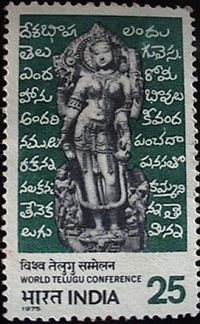
తెలుగు – 2016-02-27

From Tatoeba:

  • రాముకి ఇవ్వు. Give this to Ramu.
  • ఇది నేను అరటిపండు తింటూ ఉండగా. – This is me eating a banana.
  • ఆ! ఇది నిజమా? – Oh! Is it true?

Vocabulary:


中文 – 2016-02-27

Most frequent characters (31-35)

31 (ㄝˇ) [yě] also; yěxǔ perhaps; (); () , [yí] ;
32 (ㄧˇ) [yǐ] use/using; regard/take ( ‘take X to be Y’); so as to; as well as; can/may; so/therefore; (HDZ:) , 使; 使, ; … [sì]
33 说 /  (ㄕㄨㄛ) (ㄕㄨㄛ) [shuō] say; speak [shuì] lobby [yuè] [tuō] [suì] (HDC:)
34 / (ㄒㄩㄝˊ) [xué] study, learn; school; student [huá] [jiào] [xiào] cf.
35 (ㄉㄜˊ) [de] (grammatical function) [dé] get, reach, achieve [děi] should/must


Français – 2016-02-25

De Duolingo:

  • Je connais cela.I know about that.
  • Je veux ceci.I want this.
  • C’est un très bon vin! – This is a really good wine!
  • Ce doit être ton fils.It must be your son.
  • C’est le mien.It’s mine.
  • Non, ceci est le mien. Cela est le tien.No, THIS is mine. THAT is yours.
  • Cela arrive souvent.It happens often. / That happens often.
  • Ceci contient un bonbon.This contains a candy.
  • Celui qui est dans ma poche.The one that is in my pocket.
  • Ceux que je connais.The ones that I know. / The ones whom I know.
  • À qui est cette balle? —  Whose ball is this?
  • C’est celle du chien.It’s the dog’s. (Literally: “It is the one of the dog.”)
  • Ce tableau est moins beau que celui de Rembrandt.This painting is less beautiful than that by Rembrandt.
  • Quelle robe préfères-tu? Celle de Paris ou celle de Tokyo?Which dress do you prefer? The one from Paris or the one from Tokyo?
  • Je pense à celles qui sont en vacances.I am thinking about the ones who are on vacation.
  • Ce repas est pour ceux qui aiment les oignons.This meal is for those who like onions.

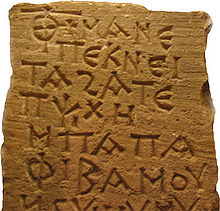
ⲧⲙⲛ̄ⲧⲣⲙ̄ⲛ̄ⲕⲏⲙⲉ – 2016-02-24

  • ⲡⲁⲛⲟⲩⲧⲉⲉⲧⲃⲉⲟⲩⲁⲕⲕⲁⲁⲧⲛ̄ⲥⲱⲕ – My god, why have you left me?
  • ϫⲉⲟⲩⲧⲉⲧⲛ̄ⲃⲱⲗⲙ̄ⲙⲟϥ – Why do you loose it?
  • ⲁϣⲡⲉⲡⲛⲟϭ – What is bigger? Which is bigger?
  • ⲛ̄ⲁϣⲛ̄ϩⲉⲡⲁⲓ̈ⲛⲁϣⲱⲡⲉ – How will that happen?
  • ⲁϩⲣⲟⲕⲛⲙ̄ⲙⲁⲓ̈ⲓ̄ⲥ̄ – What have you to do with me, Jesus?
  • ⲧⲉⲥϩⲓⲙⲉⲉⲣⲉⲟⲩⲉϣⲟⲩⲛⲙ̄ⲙⲁⲓ̈ – Woman, what do you want with me?
  • ⲟⲩⲛⲧⲏⲧⲛ̄ⲟⲩⲏⲣⲛ̄ⲟⲉⲓⲕ – How much bread do you have?